


By Patti Loveless, Broker, Cynosure Ventures, LLC · Last updated
To downsize your home in West Georgia, start 6 to 12 months ahead: price your current home, compare it with smaller homes where you want to live, check county senior tax exemptions, decide whether to sell or buy first, sort belongings in stages, and make only the repairs that pay. Planning early keeps the decision yours instead of a crisis.

About this guide
Who it is for: Homeowners in Paulding, Polk, Carroll, Haralson, Floyd, Bartow, Douglas and west Cobb counties who are thinking about a smaller, simpler or better-located home, and the adult children helping them.
What it covers: timing, the money side, Georgia tax rules, where people move, how to sequence the sale and purchase, a month-by-month plan, and how to sell a long-owned home without leaving equity on the table.
How to use it: Read straight through, or jump to the chapter you need. Each chapter links to a deeper article on that topic. For worksheets you can fill in, download the free Downsize Without Regrets guide.
- The best time to downsize is while you are healthy and have choices. A rushed move usually costs more, both financially and emotionally.
- Many long-time West Georgia owners can sell a larger home or acreage and buy a smaller home with little or no mortgage.
- County senior exemptions differ. In Paulding and Carroll counties, homeowners 65 and older can be fully exempt from school property taxes on their primary residence, so check the rules where you are moving before you choose a county.
- Married couples can generally exclude up to $500,000 of gain on the sale of a main home from federal income tax if they meet IRS rules.
- Sort belongings early and in stages. It is usually the slowest part of the move.
What does downsizing really mean?
Downsizing is moving to a home that fits the life you have now, not the life you had when the children were home. For some West Georgia families that means fewer square feet. For others it means fewer stairs, less acreage to mow, a shorter drive to grandchildren or doctors, or less money tied up in a house and more available for retirement.
Patti Loveless calls it right-sizing. A couple on ten acres outside Temple might move to a single-level home in Carrollton. A widow in a two-story home in Dallas might move to a smaller home near her daughter. A retired couple might trade a large house for a small home on two acres where they can still garden. Each is a downsizing move, and each needs a slightly different plan.
Chapter 2When is the right time to downsize?
The right time is tied to timing and choice, not a birthday. The clearest signs are:
- The peace-of-mind window is open. You are healthy and clear-minded, so you can make the decision on your terms.
- The house demands more than it gives. Yard work, stairs, repairs and unused rooms have become a burden.
- You have significant equity. Long-time owners can often fund their next home and add to retirement savings.
- You want to be closer to family or healthcare. Proximity matters more each year.
- A life transition is coming. Retirement, health changes or the loss of a spouse are easier to handle with a plan already in place.
For a self-check and more detail on each sign, read When is the right time to downsize your home in West Georgia?
Chapter 3What does downsizing cost, and what can it save?
Downsizing usually lowers monthly costs and frees up equity, but the move itself has real costs. Put both sides on paper before you decide.
| Costs of the move | Ongoing savings to compare |
|---|---|
| Real estate commission and closing costs on the sale | Lower or no mortgage payment |
| Georgia transfer tax (generally $1 per $1,000 of the sale price) | Lower property taxes, especially with senior exemptions |
| Repairs and preparation before listing | Lower homeowners insurance |
| Closing costs on the next home | Lower utilities for a smaller, newer home |
| Movers, storage and clean-out services | Less paid help for yard, acreage and upkeep |
| New furniture that fits a smaller space | Cash freed for retirement, travel or care |
West Georgia price snapshot (as of November 18, 2026)
- About 486 homes on 2 or more acres sold in Paulding, Polk, Carroll and Haralson counties over the previous 12 months, with an average asking price of roughly $483,000.
- About 395 homes under 2,000 square feet with a main-level primary bedroom were for sale in the same four counties, with an average asking price of roughly $316,000.
Source: MLS listing data via the Cynosure Ventures, LLC property search, pulled November 18, 2026. Figures are asking prices, change daily and are rounded. They are a general guide, not an appraisal.
The gap between those averages is why downsizing works for many long-time owners here. Your own numbers depend on your home's condition, location and land, so start with a market analysis of your property before you look at your next one.
Chapter 4Which Georgia tax rules matter when you downsize?
Federal tax on the sale of your home
According to IRS Topic 701, if you owned and lived in your home as your main home for at least two of the five years before the sale, you may exclude up to $250,000 of gain from income, or up to $500,000 on a joint return with your spouse. Gain above that, or on a home that does not qualify, may be taxed. Patti Loveless is not a CPA; consult a CPA before you list, especially if you rented part of the home or used it for a business.
Senior property tax exemptions vary by county
Georgia offers a statewide homestead exemption, and many counties add their own senior exemptions. Two examples in Patti's service area show how much they can differ:
- Paulding County: Under a law signed in 2022, homeowners 65 and older in the Paulding County School District are fully exempt from school district property taxes on their homestead, regardless of income.
- Carroll County: Homeowners 65 or older as of January 1 receive an $8,000 county exemption and a total school tax exemption on their primary residence, with no income requirement.
Other counties set different ages, amounts and income limits. If you are moving from one county to another, compare the exemptions in both places before you choose. A home with a slightly higher price in a county with a full senior school tax exemption can cost less to own each year. You must apply with the county tax office for your new home, generally by April 1 to receive the exemption that year.
Georgia's floating homestead exemption
Georgia's statewide floating homestead exemption, created by HB 581, limits how fast a homestead's assessed value can rise each year, although some local governments opted out. Ask the tax commissioner in your new county whether it applies.
Where do West Georgia downsizers move?
| Option | Best for | Watch for |
|---|---|---|
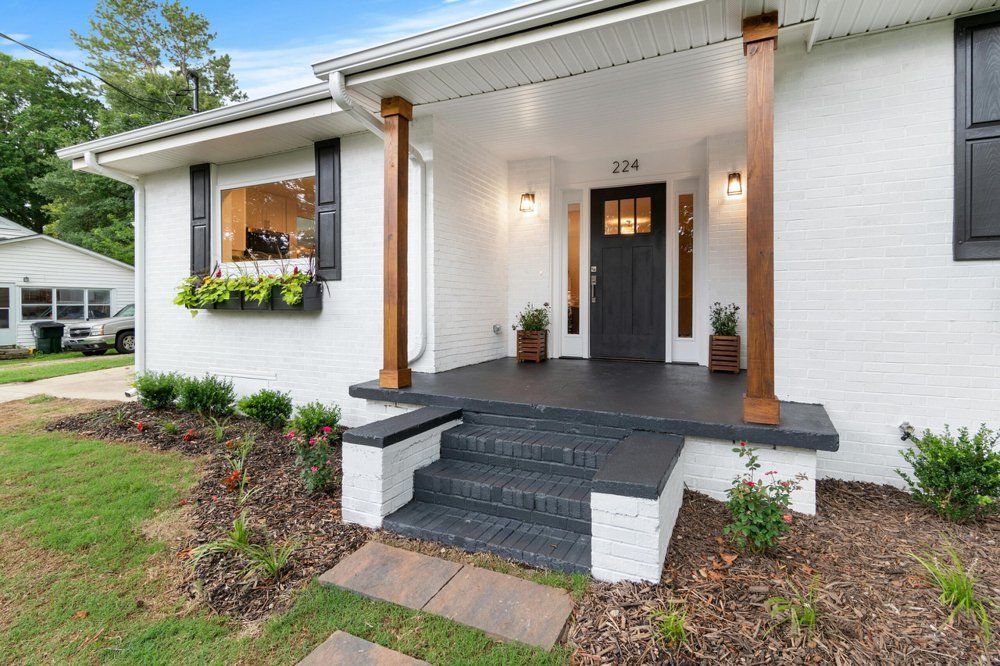
| Single-level home in town (Carrollton, Dallas, Cedartown, Rockmart, Bremen) | Shorter drives to shopping, church and doctors; easier upkeep | Smaller lots and less privacy |
| Smaller home on 1 to 3 acres | People who still want a garden, a shop or a few animals | Septic, well and yard care still apply |
| Townhome or condo | Lock-and-leave living; exterior care often handled by an HOA | HOA fees and rules; limited inventory in rural counties |
| Active adult (55+) community | Social life, amenities and like-minded neighbors | Age rules, HOA costs and resale restrictions |
| Home near adult children | Help close by and time with grandchildren | Make sure the location works if the family later moves |
| Renting for a season | Testing an area before buying | Rent increases and less control |
Some West Georgia downsizers also look across the state line at the Weiss Lake area of Cherokee County, Alabama, for lake living at a different price point. Patti holds an Alabama broker license and serves that area as well.
Whatever you choose, look for a main-level primary bedroom, wide hallways and doorways, a walk-in shower or one that can be converted, few or no entry steps, and a lot you can maintain. These features make a home easier to live in now and easier to sell later.
Chapter 6Should you sell first or buy first when downsizing?
| Approach | How it works | Trade-off |
|---|---|---|
| Sell first | Sell, then buy with a firm budget | You may need temporary housing or storage |
| Buy first | Use savings, a bridge loan or a home equity line to buy before selling | You may carry two homes for a while |
| Contingent offer | Make your purchase depend on selling your current home | Less attractive to sellers in a busy market |
| Sell with a short rent-back | Sell, then stay in the home for an agreed period after closing | Buyer must agree, and terms must be in writing |
The right choice depends on your equity, savings, lender and how quickly homes are selling in your price range. Talk with a lender early so you know your options before you list.
Chapter 7What does a 12-month downsizing plan look like?
| When | What to do |
|---|---|
| 12 to 9 months out | Get a market analysis of your home. Talk with your tax advisor and lender. Decide what kind of home and area you want. Review your will and powers of attorney. |
| 9 to 6 months out | Start sorting rooms you rarely use. Offer heirlooms to family. Get repair estimates for safety and deferred maintenance items. |
| 6 to 3 months out | Tour homes in your target area. Finish major sorting. Schedule repairs. Line up an estate sale, donation pickup or clean-out service. |
| 3 to 1 months out | Prepare and photograph the home, then list it. Choose your next home and get under contract. Book movers. |
| Closing and after | Close on both homes. Move. Apply for the homestead exemption at your new address. Update your address with Social Security, Medicare, banks and insurers. |
How do you sort a lifetime of belongings?
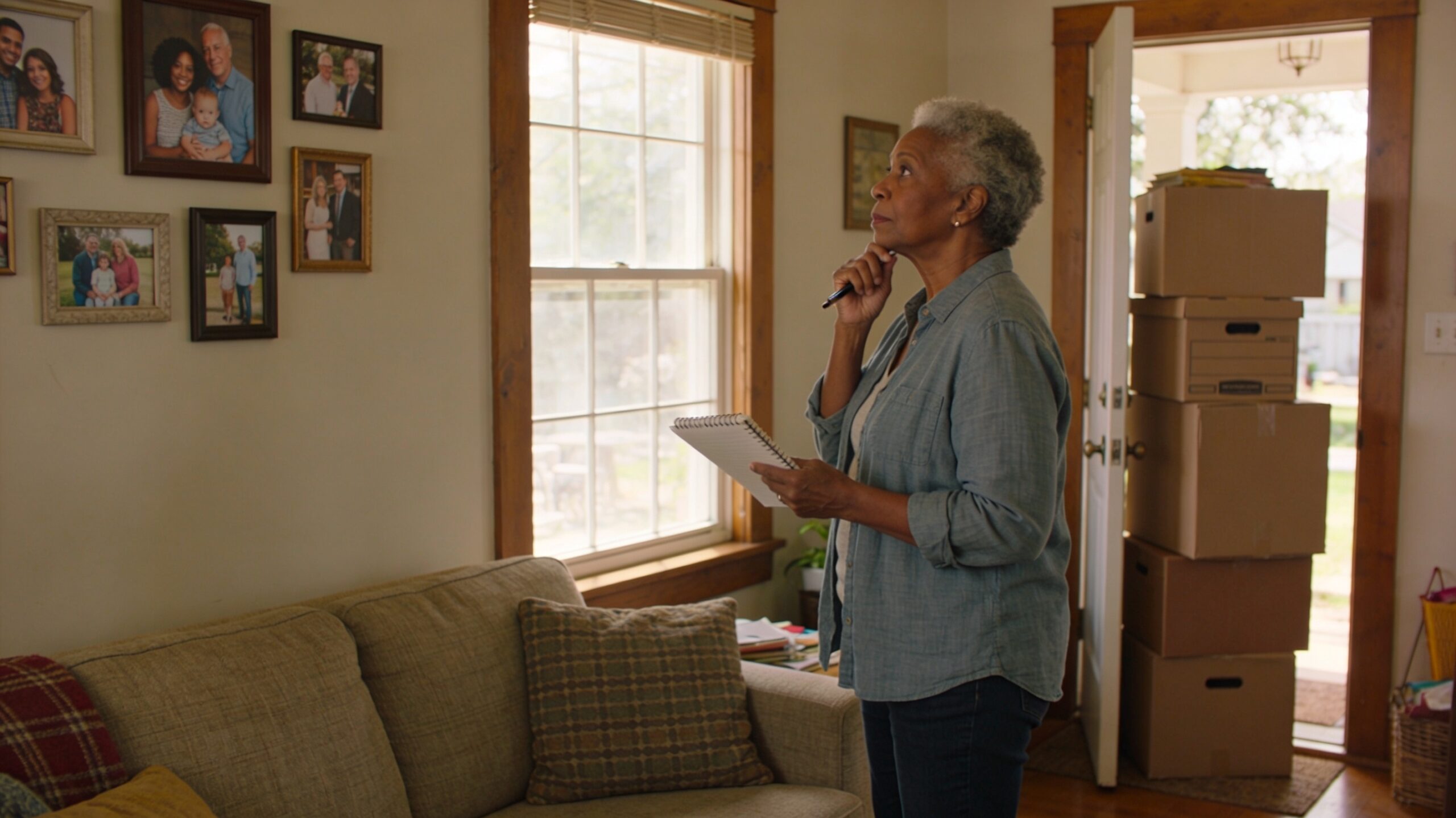
For most families, belongings take longer than the sale. A few habits make it easier:
- Start small. Begin with a closet, a guest room or the garage, not the family photos.
- Measure the new home. Choose furniture that fits the new rooms, not the old ones.
- Offer heirlooms early. Ask children and grandchildren what they want, set a deadline, and put decisions in writing.
- Use four piles. Keep, give to family, sell or donate, and discard.
- Digitize what you can. Scan photos, letters and recipes so everyone can have a copy.
- Bring in help. Estate sale companies, donation pickups and clean-out crews can handle what is left.
Give yourself grace. Letting go of things tied to decades of memories is hard work, and it is fine to take it in stages.
Chapter 9How do you sell a long-owned home for top value?
Homes owned for 20 or 30 years call for a different approach than recently updated homes. Patti's approach focuses on what buyers in West Georgia actually pay for:
- Fix safety and function first. Roof leaks, electrical issues, HVAC problems and rotted wood matter more to buyers and inspectors than cosmetic updates.
- Consider a pre-listing inspection. Finding problems before buyers do lets you fix or price for them on your terms.
- Check rural systems. On acreage, have the septic system pumped and inspected and the well tested if you have one.
- Clean, declutter and paint. Fresh neutral paint and clear rooms usually return more than a remodel.
- Price from recent nearby sales. Overpricing a long-owned home is the most common reason it sits.
- Market to the right buyers. Acreage and rural homes need photos, drone views and descriptions that show land, outbuildings and usable space.
A word about quick cash offers: Investors often send letters and texts to long-time owners. A quick sale can make sense in some situations, but convenience often comes at the cost of equity. Compare any cash offer with a market analysis before you sign.
The seller resources page explains how Patti prepares and markets homes in her service area.
Chapter 10How do you protect yourself and your family while downsizing?
Downsizing is a good time to tidy up the legal and financial side too. Review how your new home will be titled, update your will, durable power of attorney and healthcare directive, and keep important papers in one labeled place. Couples should talk through what each would want if one of them were left to decide alone. The guide on how Georgia homeowners can protect their home before life changes walks through each step, and the free Georgia Planning Checklist gives you a fill-in version to keep with your papers.
Frequently asked questions about downsizing in West Georgia
How far ahead should I start planning to downsize?
Six to twelve months is a comfortable window. That gives you time to sort belongings, make repairs, learn your home's value and find the right next home without rushing.
Will I lose my senior property tax exemption if I move to another county?
Exemptions are tied to the home and county, so you must apply again at your new address, generally by April 1. Senior exemptions differ by county, so compare them before you choose where to move.
Do I have to pay capital gains tax when I downsize?
Many sellers do not. If you meet the IRS ownership and use tests for your main home, you may exclude up to $250,000 of gain, or $500,000 on a joint return. Ask your tax advisor how the rules apply to you.
Is it better to buy a smaller home or rent after selling?
Buying usually makes sense if you plan to stay several years and want stable housing costs. Renting can be a smart short-term step if you want to try an area or wait for the right home.
Should I renovate before selling my long-owned home?
Usually not. Focus on safety, function, cleaning and paint. Major remodels rarely return their full cost, and buyers often prefer to choose their own finishes.
Can my adult children help sell my home?
Yes. Children can help with sorting, repairs and decisions. If they will sign documents for you, make sure a valid durable power of attorney is in place and that your closing attorney accepts it.
Plan your downsizing move with a local broker
Patti's free 42-page guide, Downsize Without Regrets, includes fillable housing cost worksheets, a 20-question readiness self-assessment, an 18-month timeline and a simple system for sorting a lifetime of belongings. Download it instantly and work through it at your own pace.
Patti Loveless helps West Georgia homeowners sell long-owned homes and homes on acreage, find the right next home, and protect the equity they spent decades building.

Patti Loveless, Broker
Cynosure Ventures, LLC | Guiding Every Move
Licensed since 2014, with 200+ transactions and over $50 million in sales. Patti helps West Georgia homeowners plan and complete their next move with confidence.
Call or text: 678-910-5217 | Meet the team
Cynosure Ventures, LLC, 1051 Lemon Rd, Temple, GA 30179, 678-910-5217. Equal Housing Opportunity. Patti Loveless is a licensed real estate broker, not an attorney or CPA. This guide is general information only and is not legal, tax or financial advice. Consult a CPA about all tax matters. Tax exemptions and rules change; confirm current details with your county tax office, attorney or lender.